
Squid Esports Turns Gaming Into Learning for Teens
If your teen already loves gaming, give that interest somewhere to grow. Squid Esports brings live online coaching, teamwork and purposeful practice together, helping young people build skills they can try at school and at home.

They Love the Game. Help Them Grow Through It.
A familiar game gives a teenager a reason to join in. A coach can turn a team decision, a difficult loss or a shared project into something worth practising. Our aim is to give that interest structure, with clear goals, useful feedback and time to reflect.
That fits alongside homework, family time, sport and rest. Knowing when to pause and return with a plan is part of learning to manage yourself.
How Gaming Skills Can Reach Beyond the Screen
Imagine a team rushing ahead before everyone is ready. The coach asks each learner what they need, helps them agree responsibilities, then lets them try again. Afterwards, the same questions can help with a school project.
• Communication and listening. Explain a plan, hear another view and check that everyone understands. Try it when preparing a class presentation.
• Teamwork and leadership. Share responsibilities, invite quieter voices and follow through on your part. Use the same habits in group homework.
• Problem solving and decisions. Compare options, explain your reasoning and adjust when new information arrives.
• Self-management and confidence. Take on a manageable role, use specific feedback and choose one thing to improve after a setback.
The coach helps learners make those connections and try the habits elsewhere. Each learner develops at their own pace.

Leadership or Competitive? Choose Their Starting Point
Leadership — Explore Roles and Lead Together
A structured curriculum uses esports roles and shared projects to practise broader skills. Learners might try casting, team management or analysis, work with a buddy and receive specific feedback. Weekly online group sessions last 90 minutes, with 4–10 learners.
Competitive — Practise With a Clear Goal
Coaching starts with the player’s game, experience and goals. A coach observes play, chooses a useful priority, guides practice and reviews the next step. Group sessions last 60 minutes, with 4–6 players. One-to-one coaching is available on request.
How the Programme Works
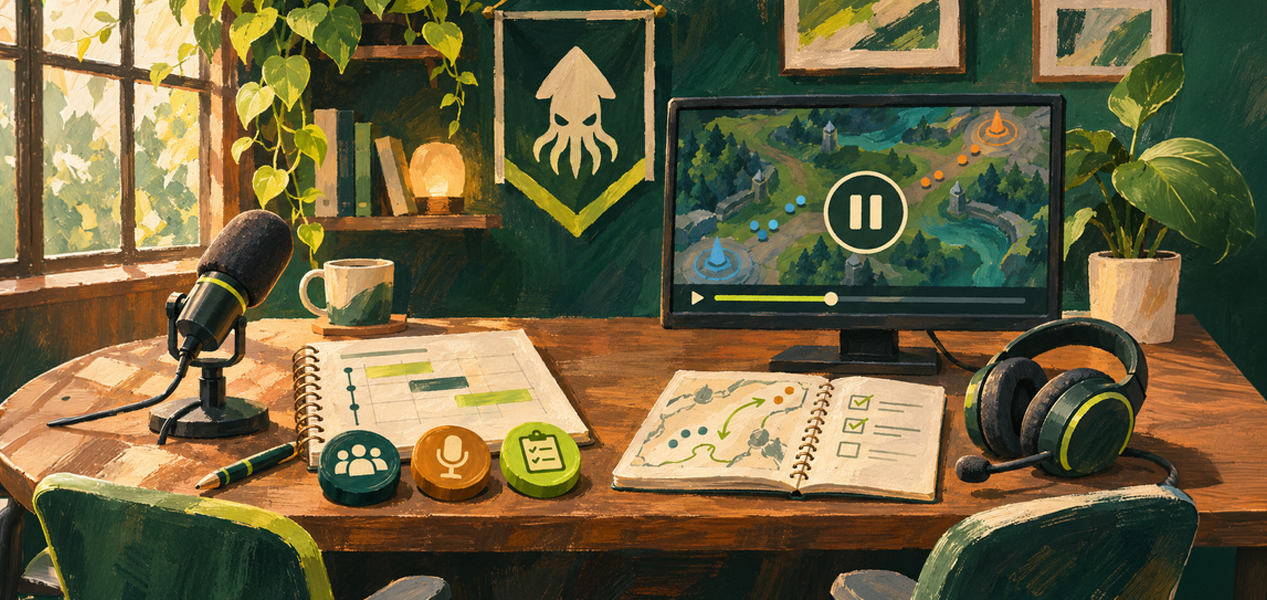
1. Find a suitable starting point. Share the learner’s age, interests, game and goals. Squid helps assess the programme, available group and schedule.2. Join live online. A coach guides the activity, gives feedback and helps learners reflect. Families provide the required equipment and eligible game accounts.
3. Follow their progress. Monthly reports during ongoing paid programmes explain what they practised, what the coach noticed and what comes next.
The programmes are designed for ages 11–18. Ask Squid about suitability outside that range. Games, groups and start dates depend on suitability and availability.
A Supervised Place to Learn Together
Live sessions bring learners together around shared interests, with an adult coach guiding the activity. Access is restricted to approved participants, and programme communication follows clear boundaries. Parents can review the arrangements and ask questions before booking.
Built by Squid Academy
Squid Academy develops esports curriculum for schools and universities. Squid Esports brings that educational approach to families through live online Leadership and Competitive programmes.
Give Their Interest a Useful Next Step
Start with what your teen wants to try. Explore the two programmes, check the available classes or talk to the Squid team about a suitable session.
Looking at a gift card? Leadership options cover one four-session block or a full 16-session level, subject to placement. Competitive group options cover 4, 8 or 12 sessions.




 Figyelj!



